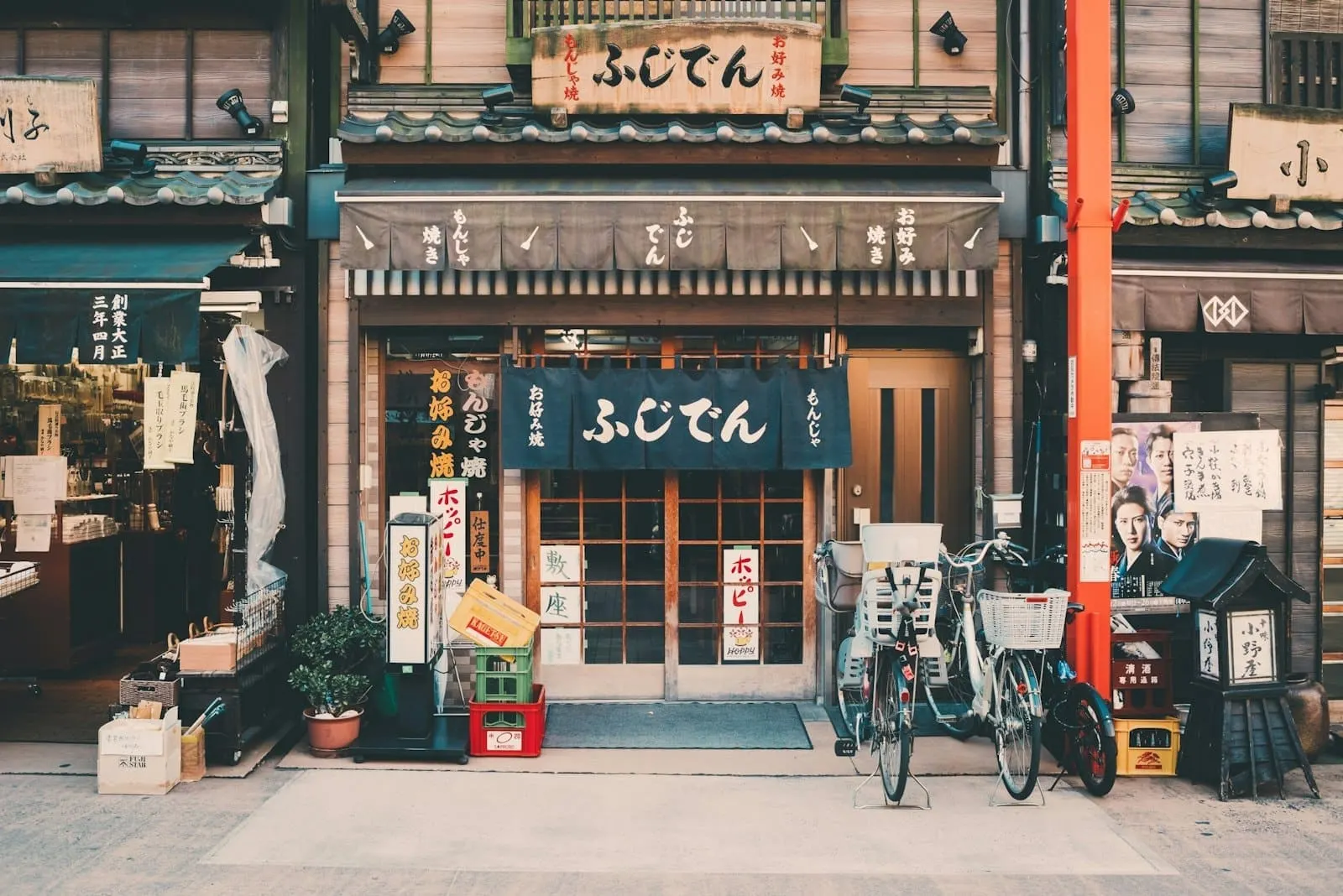

Osaka is Japan’s food capital. Where Tokyo is precise and elegant, Osaka is loud, warm, and unapologetically delicious. The city’s motto — “kuidaore” — means “eat until you drop,” and they mean it.
If you’re doing the Golden Route (Tokyo–Kyoto–Osaka), Osaka is usually the final stop. It’s the perfect place to end your trip: cheaper than Tokyo, more relaxed than Kyoto, and with street food that will ruin you for any other city.
This 48-hour guide maximizes your time with geographic efficiency. Each day covers one cluster of neighborhoods.
Getting there: Osaka is 2.5 hours from Tokyo by Shinkansen. If you’re doing the Golden Route, a 7-day JR Pass pays for itself — the Tokyo–Osaka round trip alone costs ~$97 each way. For budget details, see our Japan travel budget guide.
📍 Quick Overview
| Day | Area | Highlights |
|---|---|---|
| 1 | South Osaka | Dotonbori, Namba, Shinsekai |
| 2 | North Osaka | Osaka Castle, Umeda, Kitashinchi |
Budget estimate: $120–$200 per person (excluding flights and hotel).
Skip hours-worth of exhausting online research. Grab my printable, well-organised PDF travel blueprint for your Japan journey.
Get the PDF Guide →🍜 Day 1: South Osaka — Street Food Paradise
Morning: Kuromon Market
Start at Kuromon Ichiba Market — Osaka’s oldest food market, dating back to 1822. It’s a 580-meter stretch of stalls selling fresh seafood, wagyu beef, fruit, and street food.
What to eat:
- Fresh oysters (grilled, ¥500–¥800)
- Wagyu beef skewers (¥1,000–¥1,500)
- Strawberry daifuku (¥300–¥500)
- Tamagoyaki (rolled omelette on a stick, ¥200)
Budget ¥2,000–¥3,000 ($13–$20) for a market breakfast. Come hungry — you’ll want to try everything.
Late Morning: Namba Yasaka Shrine
Walk 10 minutes from Kuromon to Namba Yasaka Shrine, famous for its giant lion head (12 meters tall, 11 meters wide). The lion’s mouth is believed to swallow evil spirits and bring good fortune. It’s one of the most Instagrammable spots in Osaka — and far less crowded than Dotonbori.
Lunch: Dotonbori
Walk 15 minutes to Dotonbori — Osaka’s neon-lit entertainment district and the symbol of the city. The famous Glico Running Man sign is here, along with giant crab signs, giant octopus signs, and restaurants competing for your attention.
Food picks:
- Takoyaki: Osaka’s signature dish — octopus balls with a crispy outside and gooey inside. Try Wanaka or Kukuru (¥600–¥800 for 8 pieces).
- Okonomiyaki: Savory cabbage pancake with pork, seafood, or cheese. Try Chibo or Mizuno (¥1,000–¥1,500).
- Kushikatsu: Deep-fried skewers of meat, vegetables, and seafood. Try Yakko or Daruma (¥100–¥200 per skewer).
Rule of thumb: In Dotonbori, if there’s a line of locals, get in it. Osaka food is so competitive that bad restaurants don’t survive.
Afternoon: Shinsekai
Walk 20 minutes south to Shinsekai — a retro neighborhood built in 1912 that feels like a time capsule. The area centers around Tsutenkaku Tower, Osaka’s answer to the Eiffel Tower.
Shinsekai is famous for kushikatsu (fried skewers) and butatama (pork okonomiyaki). It’s cheaper and more atmospheric than Dotonbori — the ultimate “old Osaka” experience.
Cost: Lunch or snacks ¥1,500–¥2,500 ($10–$17). Tsutenkaku Tower observation deck: ¥1,200 ($8).
Evening: Dotonbori at Night
Return to Dotonbori after sunset — the neon signs are spectacular at night. Walk along the canal, take photos with the Glico Man, and grab dinner at a riverside izakaya.
Dinner pick: Hariju — a 100-year-old beef restaurant serving sukiyaki and shabu-shabu. Set meals from ¥3,500 ($23). Or Kinryu Ramen — a 24-hour ramen chain with a giant dragon sign. ¥900 ($6) for a bowl.
Stay nearby: Book a hotel in Namba or Umeda. Namba is better for food and nightlife; Umeda is better for transport connections. Both have excellent business hotels in the ¥8,000–¥12,000 range.
🏯 Day 2: North Osaka — Castles & Skylines
Morning: Osaka Castle
Start at Osaka Castle — one of Japan’s most iconic landmarks, built in 1583 by Toyotomi Hideyoshi. The castle is surrounded by a massive park (Nishinomaru Garden, ¥200 entry) that’s stunning in cherry blossom season (late March–early April) and autumn foliage (late November).
The castle tower (¥600 entry) has a museum inside with samurai armor, swords, and historical exhibits. The 8th-floor observation deck offers 360-degree views of the city.
Time needed: 2–3 hours including the walk from the station.
Lunch: Umeda
Take the subway to Umeda — Osaka’s modern business district and transport hub. It’s a stark contrast to the grit and charm of South Osaka.
Food pick: Umeda Hankyu Department Store basement (depachika) — the food hall is legendary. Buy bento boxes, sushi, and pastries from dozens of vendors. Budget ¥1,500–¥2,500 ($10–$17). Or try Maisen Tonkatsu in the department store — breaded pork cutlet sets from ¥1,500.
Afternoon: Umeda Sky Building
Walk to the Umeda Sky Building — a striking architectural landmark with a floating garden observatory on the 40th floor. The view encompasses all of Osaka and, on clear days, all the way to Awaji Island.
Entry: ¥1,500 ($10). Best time: 1 hour before sunset for golden hour photos.
Evening: Kitashinchi
End your 48 hours in Kitashinchi — Osaka’s upscale dining and entertainment district, just north of Umeda Station. It’s all narrow alleys, tiny bars, and hidden restaurants.
Dinner pick: An izakaya in Kitashinchi — expect ¥3,000–¥5,000 ($20–$34) per person with drinks. Or head back to Dotonbori for a final round of street food.
🍱 Osaka Food: The Must-Eat List
Osaka’s food culture is legendary. Here’s your checklist:
| Dish | What It Is | Where to Try | Price |
|---|---|---|---|
| Takoyaki | Octopus balls with crispy outside, gooey inside | Dotonbori (Wanaka, Kukuru) | ¥600–¥800 |
| Okonomiyaki | Savory cabbage pancake with pork/seafood | Dotonbori (Chibo, Mizuno) | ¥1,000–¥1,500 |
| Kushikatsu | Deep-fried skewers of meat and vegetables | Shinsekai (Daruma, Yakko) | ¥100–¥200/skewer |
| Kitsune udon | Udon noodles with sweet fried tofu | Any udon shop | ¥500–¥800 |
| Hakozushi | Pressed sushi (Osaka-style, not rolled) | Endo Sushi (Kuromon) | ¥1,500–¥3,000 |
| Melon pan | Sweet bread with cookie crust | Any bakery | ¥150–¥300 |
| Matcha sweets | Ice cream, parfait, mochi | Uji matcha shops in Dotonbori | ¥500–¥1,000 |
Kushikatsu rule: Double-dipping is forbidden. Once you’ve bitten a skewer, don’t put it back in the shared sauce. There’s usually a cabbage leaf to scoop sauce onto your skewer.
🚃 Getting Around Osaka
Subway
Osaka’s subway is simple and efficient. The two main lines:
- Midosuji Line (red): North-south, connects Shin-Osaka Station → Umeda → Namba. This is the line you’ll use most.
- Yotsubashi Line (blue): Parallel to Midosuji, useful as an alternative.
Fares: ¥180–¥370 per ride depending on distance. Get an IC card (Suica/ICOCA) for tap-and-pay convenience.
Walking
Osaka is more walkable than Tokyo. The key areas (Namba, Dotonbori, Shinsekai) are within 20 minutes of each other on foot. Umeda is about 3 subway stops north of Namba.
Day Trip to Nara
If you have an extra half-day, Nara is 40 minutes by train from Osaka. It’s home to Nara Park (1,200 free-roaming deer), Todai-ji Temple (world’s largest wooden building), and Kasuga Taisha (1,000 stone lanterns). The round trip costs ¥800 ($5.50).
🏨 Where to Stay in Osaka
| Area | Best For | Price Range | Notes |
|---|---|---|---|
| Namba | Food, nightlife, walking to Dotonbori | ¥8,000–¥15,000 | Best for first-timers |
| Umeda | Transport connections, shopping | ¥8,000–¥15,000 | Close to Osaka Station |
| Shin-Osaka | Early morning Shinkansen departure | ¥6,000–¥10,000 | Business hotel area, quiet |
| Tennoji | Budget travelers, local vibe | ¥5,000–¥10,000 | Up-and-coming area |
Tip: Business hotels (APA, Toyoko Inn, Dormy Inn) are the best value. Small rooms but impeccably clean, great locations, and ¥8,000–¥12,000 ($55–$80) per night.
⚖️ Osaka vs. Tokyo vs. Kyoto
If you’re deciding how to split your time:
| City | Vibe | Best For | Days Needed |
|---|---|---|---|
| Tokyo | Big, diverse, overwhelming | First-timers, shopping, culture | 3–4 days |
| Kyoto | Traditional, temple-heavy | History, temples, gardens | 2–3 days |
| Osaka | Food, fun, friendly | Food lovers, nightlife | 1–2 days |
For a 7-day trip, the classic split is 3 days Tokyo + 2 days Kyoto + 1–2 days Osaka. See our 7-day Japan itinerary for the full day-by-day plan.
❓ FAQ
Is 1 day in Osaka enough?
Yes, if you focus on food. You can hit Kuromon Market, Dotonbori, and Shinsekai in one day. But 2 days lets you add Osaka Castle and Umeda, giving you a more complete picture of the city.
Is Osaka cheaper than Tokyo?
Yes, noticeably. Food is 20–30% cheaper, hotels are 10–20% cheaper, and street food is more accessible (you can eat a full meal of takoyaki and kushikatsu for under ¥2,000). Osaka is the budget-friendly endpoint of the Golden Route.
Should I stay in Osaka or Kyoto?
If you’re doing the Golden Route and want to save money, stay in Osaka and day-trip to Kyoto (30 minutes by train). Osaka hotels are cheaper, and the evening food scene is much better. But if you want the traditional ryokan experience, stay in Kyoto.
What should I buy as a souvenir in Osaka?
Osaka is famous for snacks: Pocky (Glico is headquartered in Osaka), Royal Milk Tea (Glico’s premium tea), 551 Horai pork buns (frozen, available at Kansai Airport), and Rikuro’s cheesecake (fluffy Japanese cheesecake, ¥1,200 for a whole cake). All make great gifts.
Do I need a JR Pass if I’m only visiting Osaka?
No. The JR Pass is only worth it if you’re doing long-distance Shinkansen travel. For Osaka-only trips, use an IC card (Suica/ICOCA) for the subway. The JR Pass becomes worth it when you’re doing Tokyo → Kyoto → Osaka → Tokyo round trips.
Can I visit Osaka Castle and Dotonbori in the same day?
Yes. Osaka Castle opens at 9 AM — visit in the morning, then take the subway to Namba (20 minutes) for lunch at Dotonbori. You’ll have the afternoon and evening for Shinsekai and a second Dotonbori visit after dark.
For more Japan travel guides, browse our full collection of articles or check our Tokyo 48-hour weekend guide if you’re also visiting the capital.